

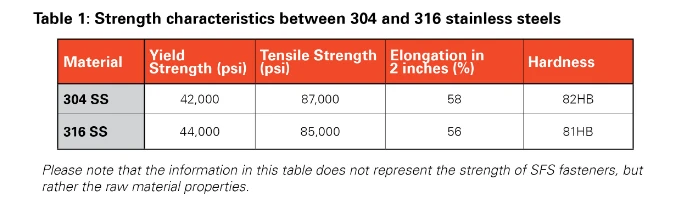
While both 304 and 316 stainless steel are strong, the added molybdenum in 316 gives it a slight strength advantage over 304. The table below shows the properties of both materials. As can be seen from the figure, 316 stainless steel has a higher yield strength (permanent deformation of the material), but lower elongation and tensile strength. In terms of strength, there isn't much difference between the alloys, but corrosion resistance is where 316 really surpasses 304.
Differences in ingredients
Considered a "general purpose" stainless steel, 304 SS is characterized by 18% chromium (Cr) and 8% nickel (Ni) in its alloy composition. In comparison, 316 stainless steel features 16% chromium (Cr), 10% nickel (Ni), and 2% molybdenum (Mo). The presence of molybdenum provides additional strength, as explored further below.
Corrosion difference
Stainless steel generally offers significant corrosion resistance compared to standard carbon steel materials. Within the stainless steel classification, some grades perform better than others. The increased nickel content in 316 stainless steel helps improve its corrosion resistance compared to 304. Therefore, the use of 316 stainless steel is recommended in coastal areas with increased salt content or in areas with higher levels of pollution or corrosive chemicals, especially chlorides.
cost analysis
Another difference between the 304 and 316 is the cost of materials. When made into fasteners, 304 SS tends to be less expensive. Therefore, 304 stainless steel products are more popular among consumers. It meets standard corrosion requirements at a lower cost than higher grade materials. Additionally, contractors working in highly corrosive environments often use 316 stainless steel fasteners to prevent stress corrosion cracking.
Other stainless steel grades
304 and 316 stainless steel fasteners are not the only material options available to consumers. The 300 series offers superior corrosion resistance, while the 400 series offers higher hardness. For example, 410 SS has a lower alloy content, which means less material has been added to its composition, resulting in a higher carbon content. The increased carbon content gives 400 series stainless steels higher strength properties and better performance at high temperatures while still maintaining some corrosion resistance. Because of the lower alloy content in 400 series stainless steel, fasteners made from this material tend to cost less than 300 series parts.
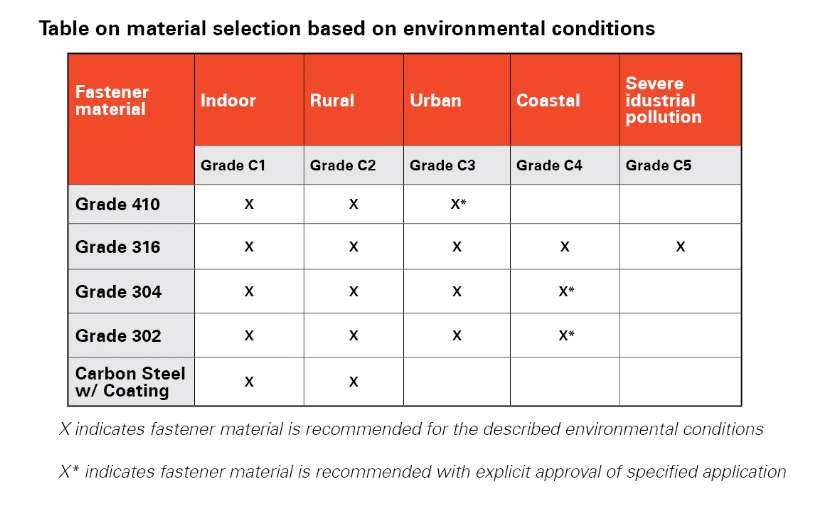
Stainless steel fasteners are available in a variety of strength and corrosion resistance properties to meet your requirements. Each grade of stainless steel has different properties and provides advantages in specific environments. It is important for contractors to select the correct fastener material based on the job site environment. This document serves as a tool to help you effectively select the correct fasteners for your needs.


