

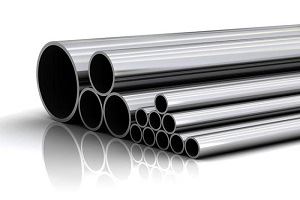
Types of Metals Used for Water Pipes
There are three common metals used for drinking water pipes, including stainless steel, copper, and brass. These metals are used because they are durable and have a long lifespan.
Brass – up to 45 years
Cast Iron – 100+ years
Copper – 50+ years
Galvanized Steel – 20 years on average
It is important to note that mixing these metals is generally not recommended due to the potential for sudden corrosion of pipes and discoloration of water. The reason is the molecular makeup of different metals. Metals are generally divided into two categories, including precious metals and base metals. Precious metals do not like to share electrons, while base metals readily share electrons. When you pair a precious metal with a base metal, the base metal will donate its electrons to the precious metal, causing the base metal to corrode. If the corrosion becomes severe enough, it can lead to premature failure of the pipe.
Order of different metals used in plumbing
When we talk about plumbing, we are talking about just a few different metals, the most common of which are copper, brass, and stainless steel. The order from precious metal to base metal includes:
Stainless steel
Copper
Brass
Lead
Zinc - used to coat galvanized steel pipes
Stainless steel and copper pipes within the same system
By looking at the list of common plumbing materials, you would think that copper and stainless steel can be easily connected together and cause few problems to the system. Unfortunately, this is not the case. While stainless steel is a common plumbing material for water pipes and fittings because it has an extremely long life and is resistant to corrosion, it is not a good idea to connect stainless steel directly to copper. This is because stainless steel and copper are actually different metals.
When two different metals are directly connected together, the weaker of the two metals will corrode electrochemically, which means, at a molecular level, that one metal will easily give up electrons while the other will retain them. When stainless steel is directly connected to copper, copper electrochemical corrosion occurs. There is some controversy, though, as to whether it is the copper or stainless steel that is corroding. Stainless steel water pipes corrode. , copper corrodes because stainless steel is a more precious metal compared to copper. While there may be debate about which metal is more susceptible to corrosion, the fact that one metal corrodes faster than another is not.
Stainless Steel and Brass Water Pipes in the Same System
Stainless steel pipes and brass pipes and fittings work better together than stainless steel and copper. However, a Chicago plumber who installs stainless steel and brass pipes and fittings needs to be careful about which type of stainless steel he or she is using. This is because it is risky to connect stainless steel water pipes to brass fittings and pipes. Unless the plumber knows which types of stainless steel and brass work well together, they should be avoided from connecting them. The reason is that only certain types of stainless steel and brass work well together. If the wrong types are used together, the system will corrode galvanically.
Reasons Why Certain Stainless Steels and Brass Can't Be Used Together
The metals should not be more than 0.15V to 0.25V on the anode index, or the distance between the metals should be very close to the distance listed on the index. In the case of stainless steel (410) and brass, they are seven metals apart, which means they will most likely corrode if connected directly. In the case of stainless steel (301, 304, and 310) and brass, they are only two metals apart, which means they can be safely connected together with minimal risk of galvanic corrosion.
Conditions that lead to galvanic corrosion
Three conditions must be met for galvanic corrosion to occur.
There must be two or more dissimilar metals within the system.
There must be electrical contact between the dissimilar metals.
There must be an electrolyte. (Water, moisture, and humidity can be considered electrolytes under the right conditions.)
How to prevent copper galvanic corrosion
Only use similar metals in your piping system and double-check that they are similar by referencing the anode index.
When installing a piping system, never use dissimilar metals, including fasteners, hangers, bolts, screws, etc. Even screws in dissimilar metals can cause accelerated corrosion around the screws.
If you must use dissimilar metals in your piping system, use a dielectric connector to connect the two pipes, which will prevent electrical contact between the two dissimilar metals.


