

304 stainless steel pipe has strong characteristics, and its corrosion resistance is also loved by many consumers. According to its function, it can be seen that it is suitable for many fields, and its high temperature resistance is also very strong. However, when used above 450 °C, the surface of the steel pipe will turn yellow.
So, what are the principles and influencing factors of high temperature discoloration of 304 stainless steel pipe surface?
The oxide film on the surface of stainless steel welded pipe is actually a five-color transparent film, and its color change is affected by the principle of light interference. When light interferes, which color appears is mainly caused by the change in the thickness of the surface oxide film. Therefore, the oxidation resistance of 304 stainless steel pipe is an effective way to solve its high temperature discoloration.
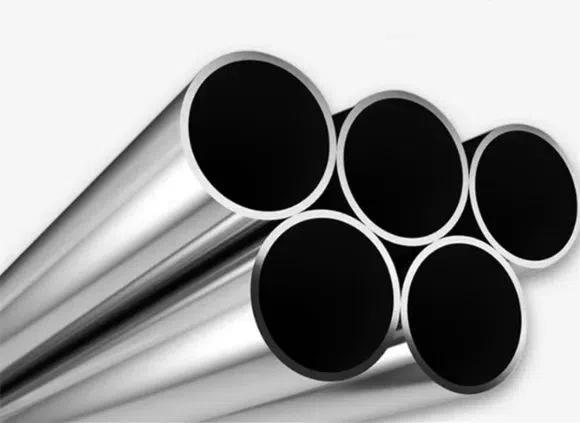
The factors affecting the oxidation resistance mainly include the influence of chemical elements, the influence of oxide film, and the influence of surface roughness.
1. Chemical elements
The carbon content in the 304 stainless steel pipe is low. During the oxidation process in a high temperature environment, carbon atoms are easily diffused into the stainless steel matrix, so the oxidation process of the pipe is also accompanied by a carburizing process.
Therefore, in the test, steels with different contents of chromium, silicon and nickel can be selected for high-temperature cycle test. After the test, the increase ratio of carbon content in various steels was measured, and the degree of oxidation of the material was judged by the amount of carburization.
In order to further verify the influence of silicon element on the carburization resistance of stainless steel pipe, only the proportion of silicon element was adjusted in 310S, and then a high temperature cycle test was carried out. The final test results show that when the mass fraction of chromium element is increased to more than 22% or the mass fraction of silicon element is increased to more than 2%, the high temperature oxidation resistance of the steel pipe is significantly improved.
2. The influence of oxide film
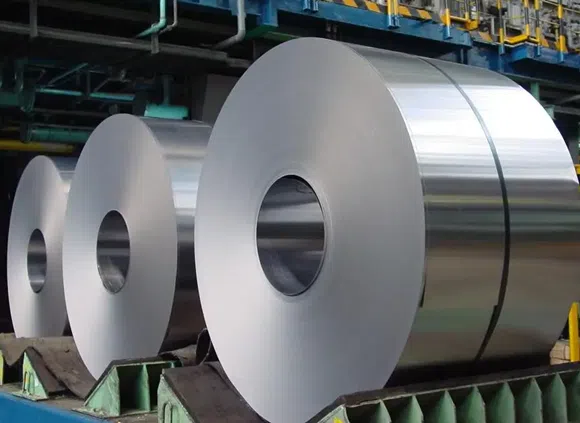
The tough oxide film on the surface can prevent the oxidant from invading the stainless steel substrate, that is, preventing the continuous generation of oxidation, while the loose oxide film will continue to thicken the oxide film. In the continuous production line, the forced oxidation operation of the 304 stainless steel pipe is carried out by the continuous pickling method to improve the density of the oxide film.
3. The influence of surface roughness
The oxidation of 304 stainless steel pipe in a high temperature environment will thicken the surface oxide film. This situation is directly related to the oxidation resistance of the material itself and the heat absorption capacity of the material. Surface roughness and surface inverse chromaticity will affect the heat absorption per unit area of the pipe and affect the degree of discoloration.
Practice has shown that when the surface roughness of the thin-walled stainless steel pipe is less than 0.022μm, its heat absorption capacity is significantly reduced, the steel pipe will not be further oxidized, the thickness of the oxide film is basically unchanged in a high-temperature environment, and the degree of discoloration is also very slight.


