

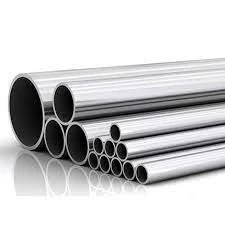
Products Description
Ss Hollow Pipe is a kind of stainless metal tube that is broadly used in quite a number industries, such as construction, automotive, and aerospace. This tube is recognized for its excessive strength, durability, and corrosion resistance, making it an best desire for worrying applications.
The specification of Ss Hollow Pipe can fluctuate depending on the necessities of the application. It is handy in one-of-a-kind sizes, shapes, thicknesses, and finishes. The manufacturing system of SsHollowPipe includes various steps, such as cloth selection, melting, casting, rolling, and finishing. The tube is machined to particular dimensions and undergoes a number checks to make sure its fantastic and performance.
Ss Hollow Pipe can be used in a vast vary of applications, such as structural supports, exhaust systems, warmth exchangers, and stress vessels. Its excessive energy and corrosion resistance make it appropriate for use in harsh environments and corrosive media. Additionally, its aesthetic attraction makes it a famous desire for architectural and ornamental applications.
The technical parameters of Ss Hollow Pipe encompass its tensile strength, yield strength, elongation, hardness, and corrosion resistance. These parameters are fundamental in finding out the suitability of the tube for unique applications. Ss Hollow Pipe comes with specific utilization directions and upkeep hints to make sure its ideal overall performance and longevity.
Seamless stainless metal pipes are normally extra appropriate for vital purposes and are extensively used in industrial pipelines such as petroleum
Another variant is SS 316Ti ERW tubing, manufactured the usage of an electric powered resistance welding (ERW) manner the place electrical energy is exceeded thru the flat ends.
The hex form approves for multiplied leverage in the course of set up and elimination the usage of a wrench.
Common Applications of Pipes
Pipes are essential components across a wide range of industries and everyday infrastructure. Here are some of the most common applications:
Plumbing systems in buildings
Pipes are widely used to carry water and remove wastewater in residential, commercial, and industrial buildings.
HVAC systems
In heating, ventilation, and air conditioning systems, pipes help circulate refrigerants and other fluids.
Fire safety systems
Pipes are a key part of sprinkler systems and fire hydrants, delivering water and fire-retardant agents during emergencies.
Oil and gas industry
Pipes are used extensively in oil refineries and drilling operations to transport crude oil and natural gas from extraction sites to processing facilities.
Agriculture
In irrigation systems, pipes distribute water to fields, gardens, and greenhouses efficiently.
Chemical industry
Pipes move chemicals and other liquids safely through processing plants and production lines.
Food and beverage industry
Pipes are used to transport ingredients, liquids, and finished products hygienically throughout production facilities.
Mining operations
In mining, pipes carry water, slurry, and extracted minerals throughout the site.
Construction sites
Pipes are used to transport water, concrete, and other construction materials where needed.
Manufacturing and industrial plants
Factories rely on pipes to move raw materials, gases, and fluids as part of their production processes.
Cable protection and routing
Pipes are also used to house and protect electrical wiring and fiber optic cables during installation and operation.


FAQ
Q: 1. Do stainless steel seamless pipes leak?
A: When installed correctly, stainless steel seamless pipes are highly reliable and won't leak. Their seamless design actually reduces weak points where leaks could occur.
Q: 2. Can stainless steel seamless pipes rust?
A: While stainless steel is highly resistant to rust, it can corrode if the surface is severely damaged or exposed to harsh environments for long periods. However, under normal conditions, rust is not a concern.
Q: 3. Can stainless steel seamless pipes last 50 years?
A: Yes, and even longer in many cases. Stainless steel pipes are incredibly durable-three times stronger than copper and 8 to 10 times stronger than PPR pipes. They can handle high-speed water flow (up to 30 meters per second), resist impact, vibration, fire, and even earthquakes. They won't burst, crack, or wear down easily, making 50 years a conservative estimate. With proper installation and maintenance, they can outlast the building itself.
Q: 4. Does temperature affect the lifespan of stainless steel seamless pipes?
A: No. Unlike PPR pipes, which can crack or leak when exposed to repeated hot and cold cycles, stainless steel handles temperature fluctuations without any issues. The material remains stable, so its lifespan isn't affected.
Q: 5. Does water pressure reduce the service life of stainless steel pipes?
A: Not at all. Thin-walled stainless steel seamless pipes can handle pressures up to 2.5 MPa, while typical household water pressure is only 0.3–0.6 MPa. High water flow won't affect their performance or shorten their lifespan.
Q: 6. How important are raw materials?
A: Extremely important. The quality of a pipe depends largely on the material used, along with manufacturing processes and testing methods. Stainless steel systems use precision-engineered components-pipes, fittings, rubber seals, and tools-that work together as a high-performance system. Compression-type fittings, in particular, offer superior durability, leak prevention, and long-term health safety.
Q: 7. Is professional installation really necessary?
A: Absolutely. Even with top-quality materials, poor installation can cause problems. A water piping system includes pipes, fittings, and the layout design. Proper installation by skilled professionals ensures everything works as intended and prevents leaks or failures down the line.
Q: 8. Wall embedding vs. ceiling installation – what's better?
A: Many installers recommend ceiling-mounted water pipes, especially with PPR, because leaks in buried or wall-embedded pipes can be hard to detect and fix. However, stainless steel seamless pipes are strong and reliable even when buried or embedded in walls. They don't suffer from the same problems as PPR when exposed to changing temperatures, which makes them a safer and more durable choice for any type of installation.
Q: 9. Can you test pipe quality by hitting it with a hammer?
A: Some people try hitting pipes with a hammer to test their strength. In warmer weather, PPR pipes might hold up, but in cold temperatures, they become brittle and can easily crack. Stainless steel seamless pipes, on the other hand, are tough in any season-they won't break or crack under impact, whether it's summer or winter.
Q: 10. Why is 304 stainless steel used instead of 201 for water pipes?
A: Because of the environment they're used in. Grade 201 stainless steel is okay for dry areas like decorative applications, but not for plumbing. Water supply pipes are exposed to moisture and a variety of materials, which can cause 201 to rust over time. That's why 304 stainless steel is the standard-it resists corrosion much better in wet or humid conditions. In coastal or marine environments, an even higher grade like 316L is often used for extra protection.
Hot Tags: ss hollow pipe, China, suppliers, manufacturers, factory, wholesale, for sale


