

Product description
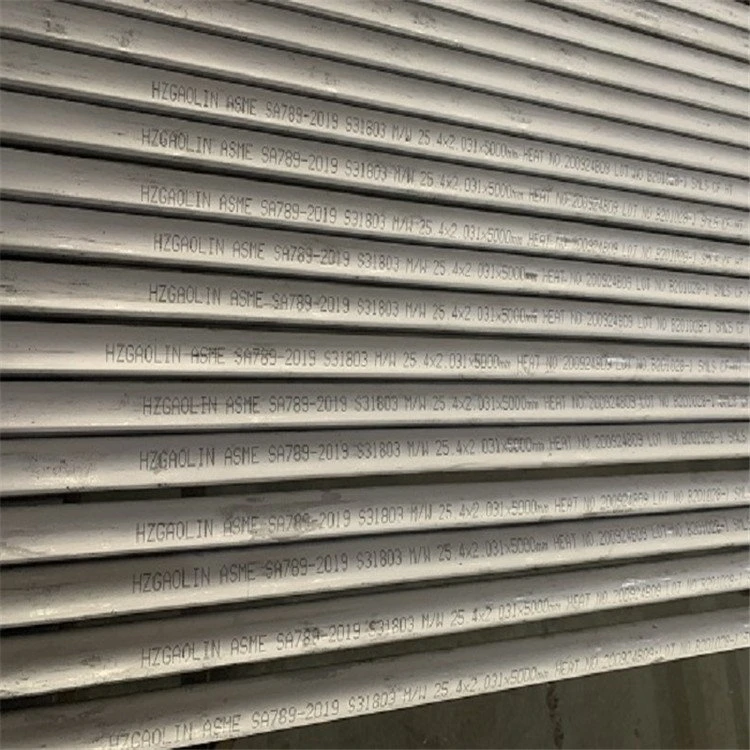
Sch 40 Stainless Steel Pipe is a type of pipe used in various applications, including the pharmaceutical, food, and chemical industries. The pipe is made of stainless steel and is used for its corrosion-resistant properties, strength, and durability. To ensure the quality of Sch40 Stainless Steel Pipe, the pipe needs to undergo certification testing. The testing process involves checking the chemical composition of the steel, the dimensional accuracy of the pipe, and the mechanical properties of the pipe. The certification testing is conducted by accredited testing authorities and ensures that the pipe meets the required standards.
The processing of the Sch 40 Stainless Steel Pipe requires specialized equipment. The equipment used to process the pipe includes a range of cutting, welding, and polishing machines. These machines are designed to ensure that the pipe is cut to the correct length, the welds are strong and precise, and the surface of the pipe is smooth and free from defects. The equipment used to process the pipe is operated by trained professionals who have the necessary skills and experience to ensure that the pipe meets the required specifications. In conclusion, Sch 40 Stainless Steel Pipe is a high-quality product that requires certification testing to ensure its quality. The processing of the pipe requires specialized equipment and skilled professionals to ensure that the pipe is of the required standard.
Due to different uses of each product, its processing technology and raw material quality requirements are also different. Generally speaking, different stainless steel products require different thickness tolerances of raw materials. For example, Class II tableware and heat preservation cup, the thickness tolerances are generally higher, ranging from - 3% to 5%, while Class I tableware thickness tolerances are generally required to be - 5%, steel pipe thickness tolerances are required to be - 10%, the thickness tolerances of hotel refrigerator materials are required to be - 8%, and dealers' requirements for thickness tolerances are generally between - 4% and 6%. At the same time, the difference in the domestic and foreign sales of products will also lead to the difference in the customer's requirements for the thickness tolerance of raw materials. Generally, customers of export products have higher requirements for thickness tolerance, while domestic enterprises have relatively low requirements for thickness tolerance (mostly due to cost considerations), and some customers even require - 15%.
① DDQ (deep drawing quality) material: refers to the material used for deep drawing (drawing), which is also known as soft material. The main characteristics of this material are high elongation (≥ 53%), low hardness (≤ 170%), internal grain grade between 7.0 and 8.0, and excellent deep drawing performance. Many enterprises that produce thermos bottles and pans generally have a high processing ratio (BLANKING SIZE/product diameter) of 3.0, 1.96, 2.13 and 1.98 respectively. SUS304DDQ materials are mainly used for these products with high processing ratio. Of course, products with processing ratio more than 2.0 generally need several times of stretching to complete. If the raw material extension is not reached, the products are prone to crack and pull through when processing deep-drawn products, which affects the qualified rate of finished products, and of course increases the cost of manufacturers;
② General material: It is mainly used for materials other than DDQ. This material is characterized by relatively low elongation (≥ 45%), relatively high hardness (≤ 180HB), and internal grain size grade between 8.0 and 9.0. Compared with DDQ materials, its deep drawing performance is relatively poor. It is mainly used for products that can be obtained without stretching, such as spoons, forks, electrical appliances, and steel pipes of a class of tableware. However, compared with DDQ material, it has an advantage that its BQ property is relatively better, which is mainly due to its slightly higher hardness.
Stainless steel sheet is a kind of inexpensive material, but customers have very high requirements for its surface quality. Various defects, such as scratches, pits, sand holes, dark lines, creases, and pollution, are inevitable in the production process of stainless steel sheets. Therefore, the surface quality of stainless steel sheets, such as scratches, creases, and other defects are not allowed in high-grade materials, and the defects such as pits and sand holes are also not allowed in the production of spoons, spoons, forks, because it is difficult to throw them away during polishing. It is necessary to determine the surface quality grade according to the degree and frequency of various surface defects, so as to determine the product grade. 


Hot Tags: sch 40 stainless steel pipe, China, suppliers, manufacturers, factory, wholesale, for sale


